
Chasing a personal best over the marathon distance? The Nike Alphafly delivers maximum energy return with ZoomX foam, a carbon plate and Air Zoom pods for the moment that counts on race day.
Nike Alphafly. The racing weapon for your best marathon.
So that you don't get the wrong idea about this running shoe, let's be clear from the start: the Nike Alphafly is not a shoe you slip on for an easy loop after work. This is a genuine champion. And it is built for exactly the day you have spent months training for.
Inside the midsole, two Air Zoom units work like built-in springs. Together with ultralight ZoomX foam and a full-length carbon-fibre plate, they catapult you towards a personal best with every stride. It was in this setup that Kelvin Kiptum ran his marathon world record in Chicago in 2023. But that is exactly why this shoe asks a lot of you: clean running form, well-trained muscles and the discipline to save the Alphafly for the special days. For your everyday training or a relaxed Sunday run, there are better shoes in the range. The Pegasus 42 and the Vomero 18 are made for precisely that.
Key facts
- Nike's premium racing shoe for the road – built for marathon days and long race distances.
- At its heart: two Air Zoom units in the forefoot, ZoomX foam and a full-length carbon Flyplate.
- Together they deliver the highest propulsion in Nike's range.
- Extremely light, incredibly fast, but also a highly specialised racing shoe with limited durability – not for everyday training.
Table of contents
Is the Nike Alphafly right for you or not?
- … you are looking for a specialised marathon shoe for race day and have trained for it for months.
- … you are experienced, roll through your stride cleanly and have stable foot and core muscles.
- … you want the highest possible propulsion over long distances and deliberately save the shoe for races.
- … you have a neutral gait and don't need lateral guidance.
- … you run on asphalt and road surfaces.
-
… you need a reliable training shoe for your daily kilometres. → Nike Pegasus 42
-
… you simply enjoy running and want to enjoy your marathon. → Nike Vomero 18
-
… you want a durable carbon shoe for weekly speed sessions. → Nike Zoom Fly
-
… your foot rolls inwards and you need stability. → Nike Structure
-
… you regularly run on forest trails and gravel paths. → Nike Pegasus Trail
What can the Nike Alphafly do?
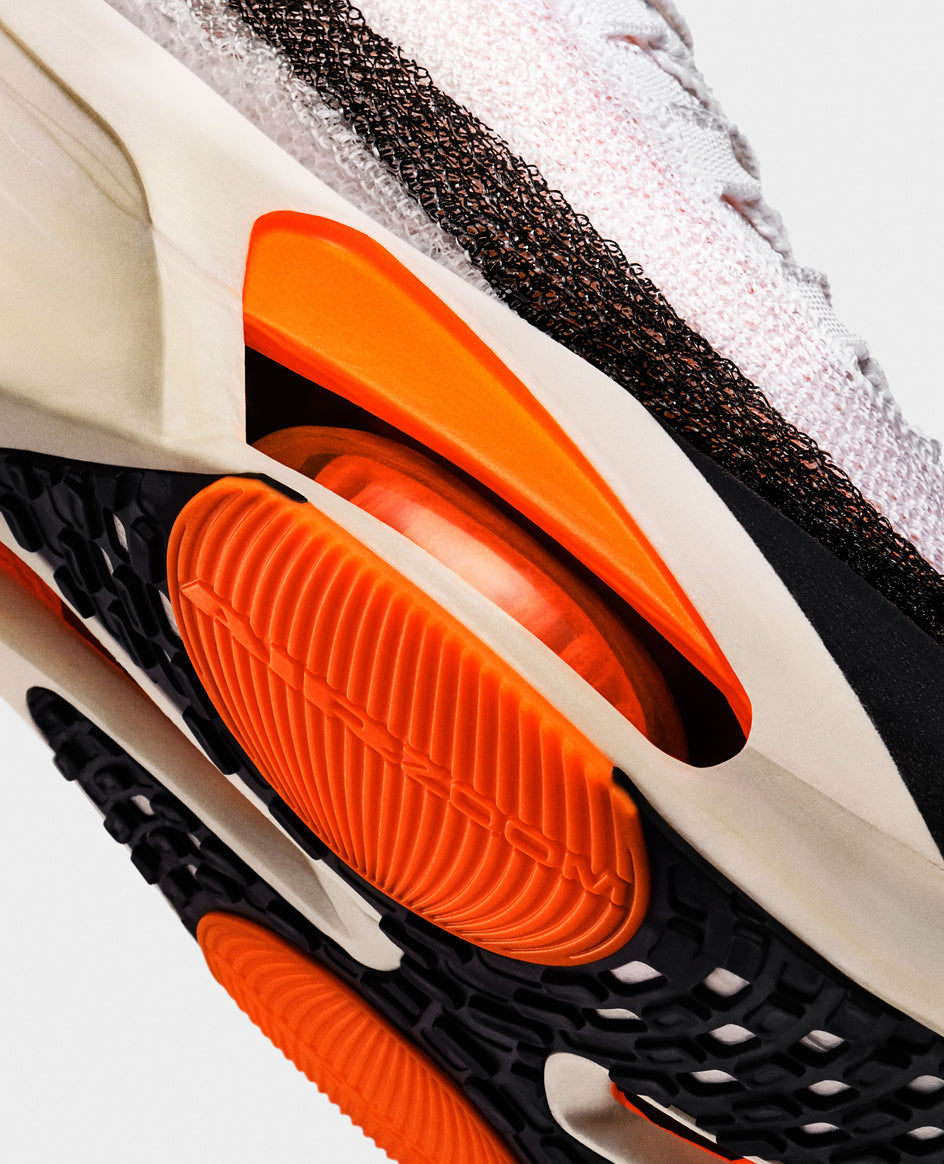
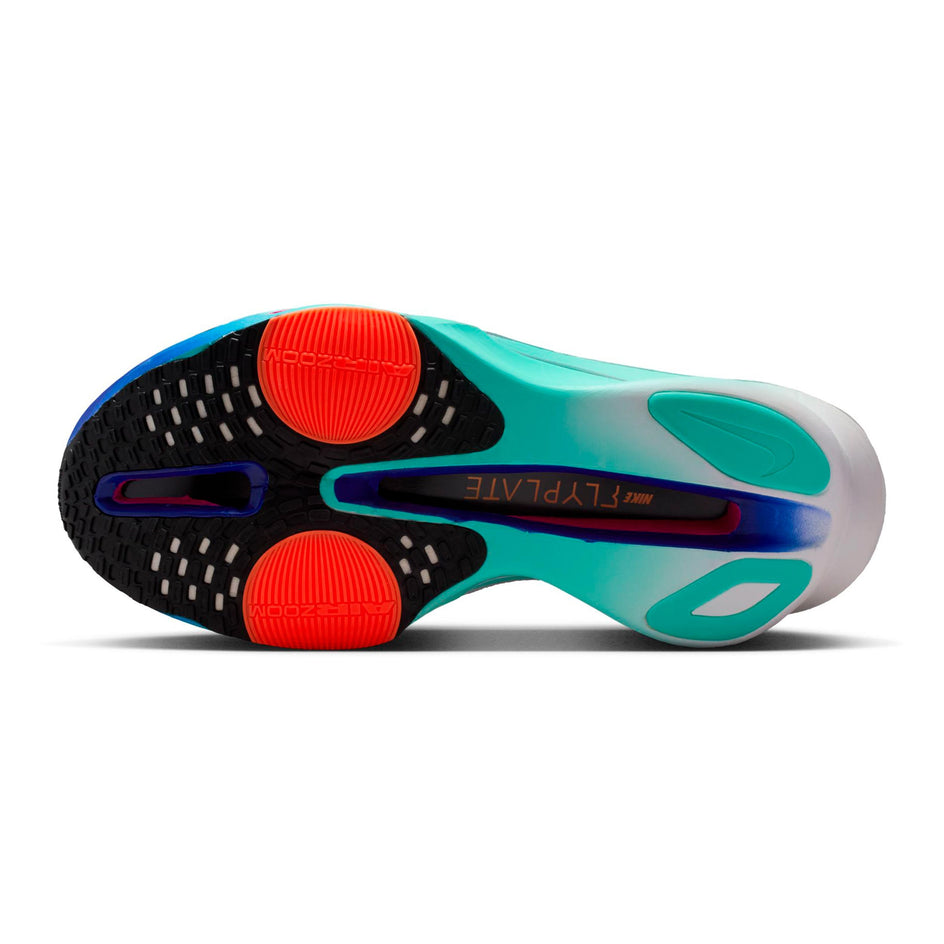
The Nike Alphafly is Nike's racing shoe for the marathon. What separates it from the rest of the range sits in the forefoot: two Air Zoom units filled with tensioned fibres under pressure. With every toe-off they compress and return the energy like a trampoline. You feel this spring effect above all in the final kilometres of a marathon, when your muscles tire and every extra impulse counts.
Around these Air Zoom units sits ZoomX, Nike's lightest and most responsive foam. The same material in which Eliud Kipchoge became the first human to run the marathon distance in under two hours in Vienna in 2019 – under special conditions, which is why it does not count as a world record. Embedded in the foam is the Flyplate, a carbon-fibre plate running from heel to toe. It deliberately stiffens the sole, tips you forward with every step and amplifies your toe-off.
This construction comes at a price. What is extremely light and responsive does not last forever. The soft ZoomX foam is tuned for performance, not longevity. Realistically you get around 300 to 400 km before the propulsion noticeably fades. A training shoe like the Pegasus easily handles double that. The Alphafly is therefore not a training shoe. It is the special shoe you save for the big day.

Jan Mönch, Running Point buyer
"The Alphafly was designed and built for a new marathon personal best, and that is exactly how it feels. It combines propulsion with enough cushioning and support to get you through 42 kilometres genuinely fast. It works over the half marathon too, but its distance is the marathon."
The current Nike Alphafly 3. Technical data and what's new.
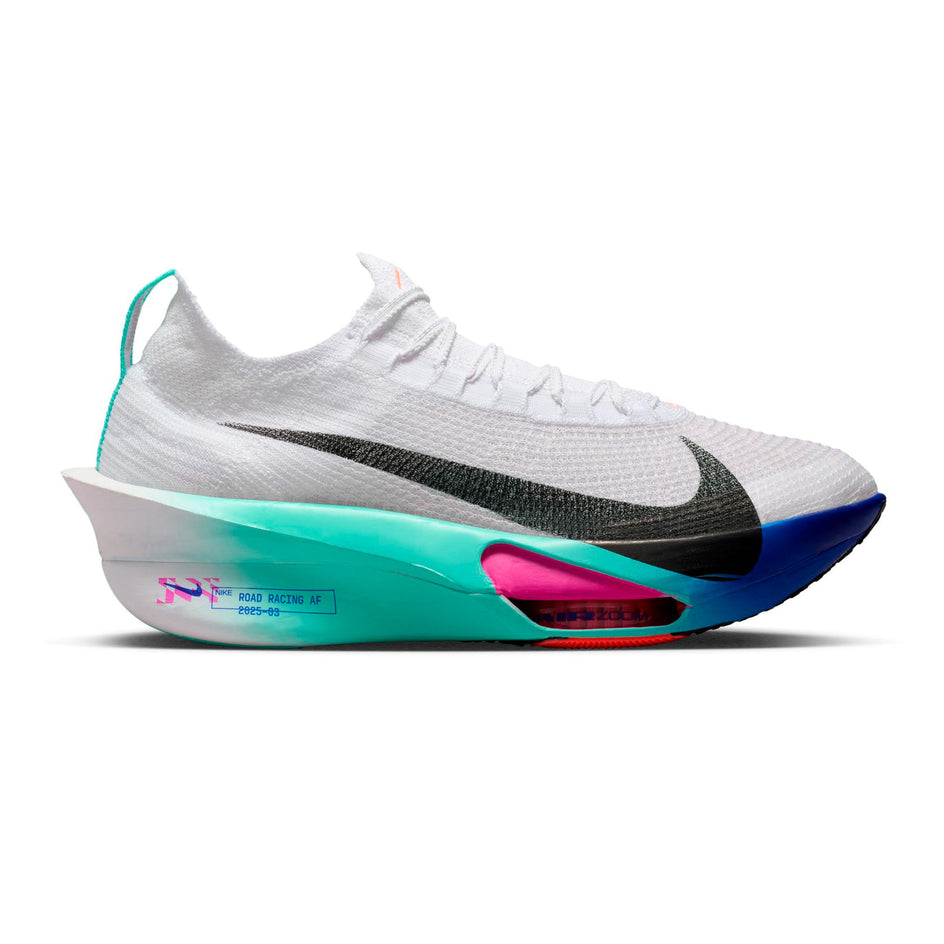
We currently stock the third generation. With the Alphafly 3, Nike built the midsole as one continuous block for the first time. The two predecessors still had the heel and forefoot separated, which made the shoe look somewhat bulky. This version rolls through noticeably more smoothly. The carbon plate has also become a little wider, giving the shoe more stability – especially through corners. On top of that comes the new Fast Shot outsole, which grips better and lasts longer than its predecessors despite using less material. All in all, the Alphafly 3 is the lightest Alphafly Nike has ever built.
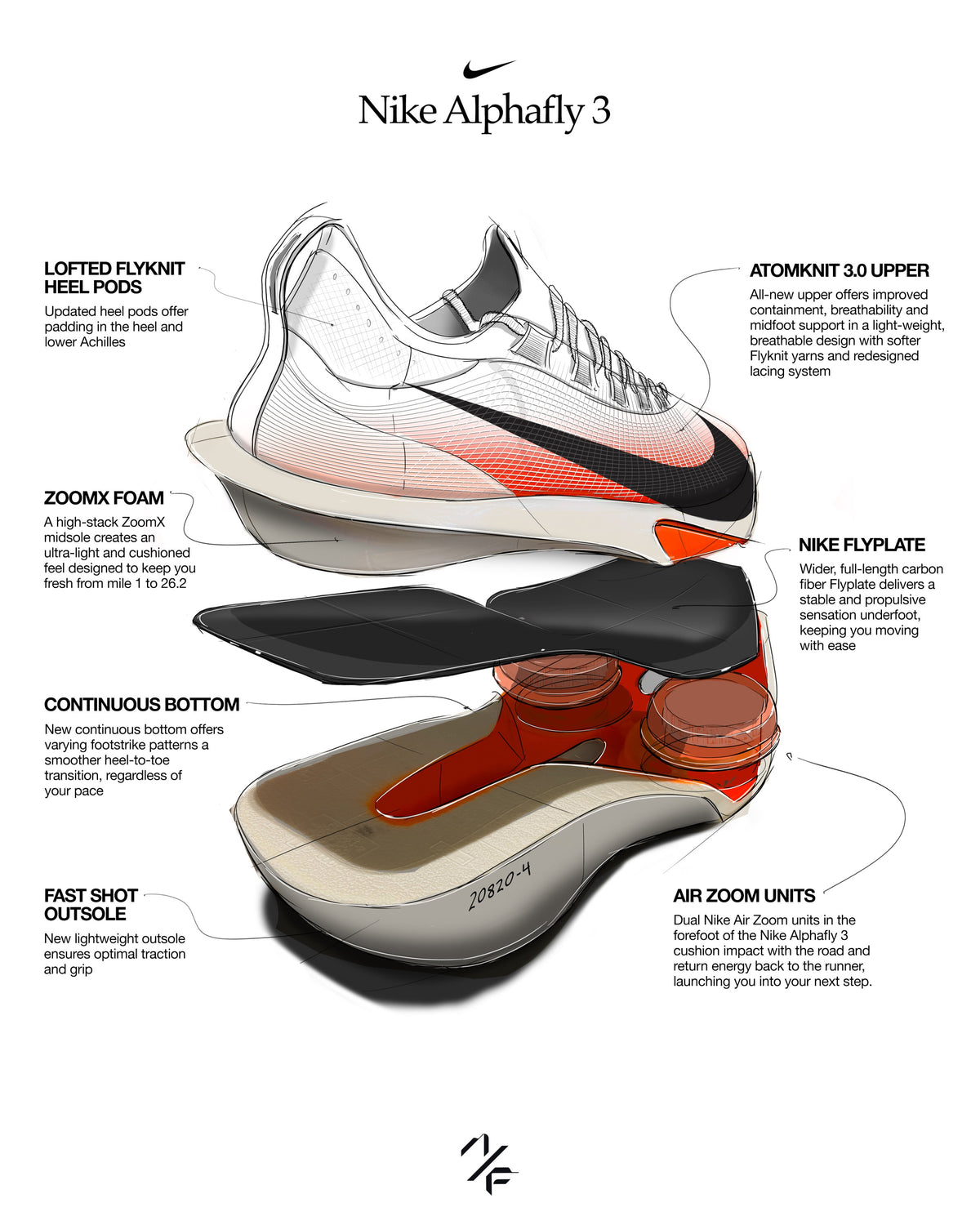
The upper is made from Atomknit 3.0, an ultralight version of Nike's Flyknit. Thin, breathable and stretchy in every direction, so your foot has room when it swells over long distances. The fit is deliberately snug and race-ready, because your foot should not slip at high speed.
For road races, the Alphafly 3 is approved by World Athletics. On the track, a sole height limit of 20 mm has applied since November 2024 – so you may not wear it there in competition. There is nothing to stop you using it for speed sessions on the track, though.
Our verdict. How does the Nike Alphafly run?
You barely notice you are wearing a shoe. The Alphafly really is so light that you almost forget it once it's laced up. When walking and over the first slow metres, the tall stack still feels a little unsettled. But this shoe wants to go fast, not for a stroll. So as soon as you pick up the pace, it switches over. The Flyplate tips you forward, the ZoomX foam gives softly and springs straight back. And then the Air Zoom units in the forefoot come into play. At toe-off you feel a clear impulse that pushes you forward. A genuine catapult.
Over the first kilometres of a marathon this feels almost effortless. But where the Alphafly really shows what it was built for is the final ten kilometres. When your legs get heavy and your stride shortens, the Air Zoom pods keep working and give back the energy your muscles can no longer produce. That is what sets it apart from shoes that cushion with foam alone.
There is one thing you should know, though. This shoe gives you no lateral guidance. It has neither support elements nor a wide base to catch you. Anyone with an untidy stride or a core that isn't yet stable enough can run into problems over long distances. The Alphafly helps you with speed. Not with technique. That is a decisive difference from a Pegasus or Structure, which forgive mistakes.
For forefoot and midfoot runners with clean mechanics, the Alphafly is an experience. For heel strikers, the third generation works considerably better than its predecessors thanks to the continuous midsole. But the shoe feels most coherent when you land on the midfoot and keep the pace high.
Nike Alphafly vs. Nike Vaporfly. Where are the differences?
Two racing shoes, both with a carbon plate and ZoomX foam. So why two? Quite simply, because they are built for different race situations.
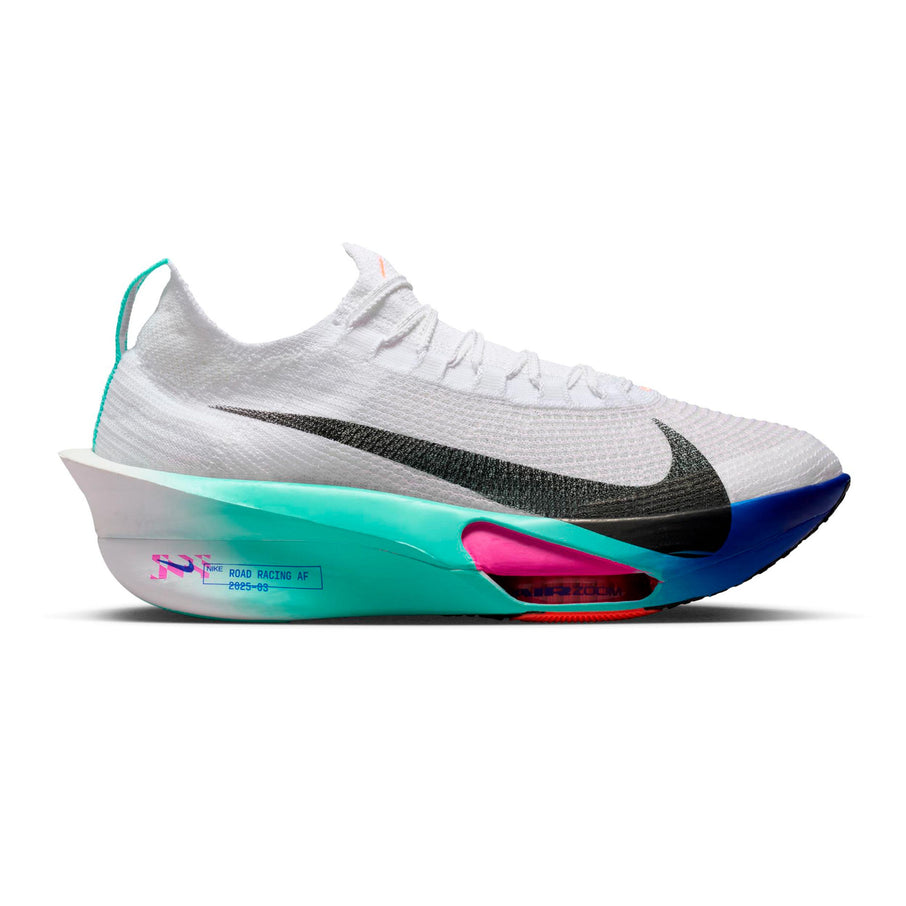
If you know you want to hold an evenly high pace over 42.195 km, the Alphafly is your shoe. The Air Zoom units give you a bounce on straight stretches that a pure foam shoe cannot match. In return it is heavier. And through tight corners it responds more sluggishly than the Vaporfly.
The Vaporfly does without the Air Zoom pods and is lighter and nimbler as a result. On twisting city courses, in 10 km races or half marathons where you change pace more often, it has the edge. Over long straight stretches, however, it lacks the Alphafly's extra energy store.
What alternatives are there to the Nike Alphafly?
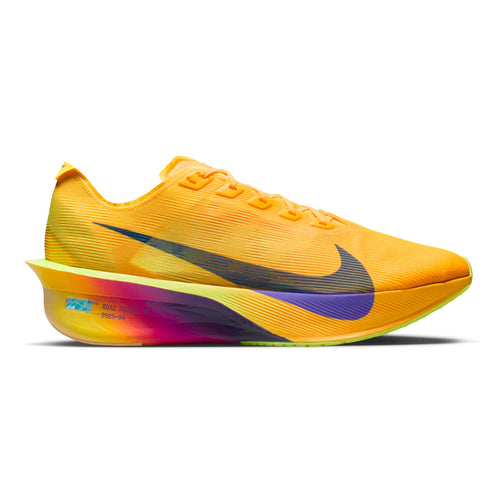
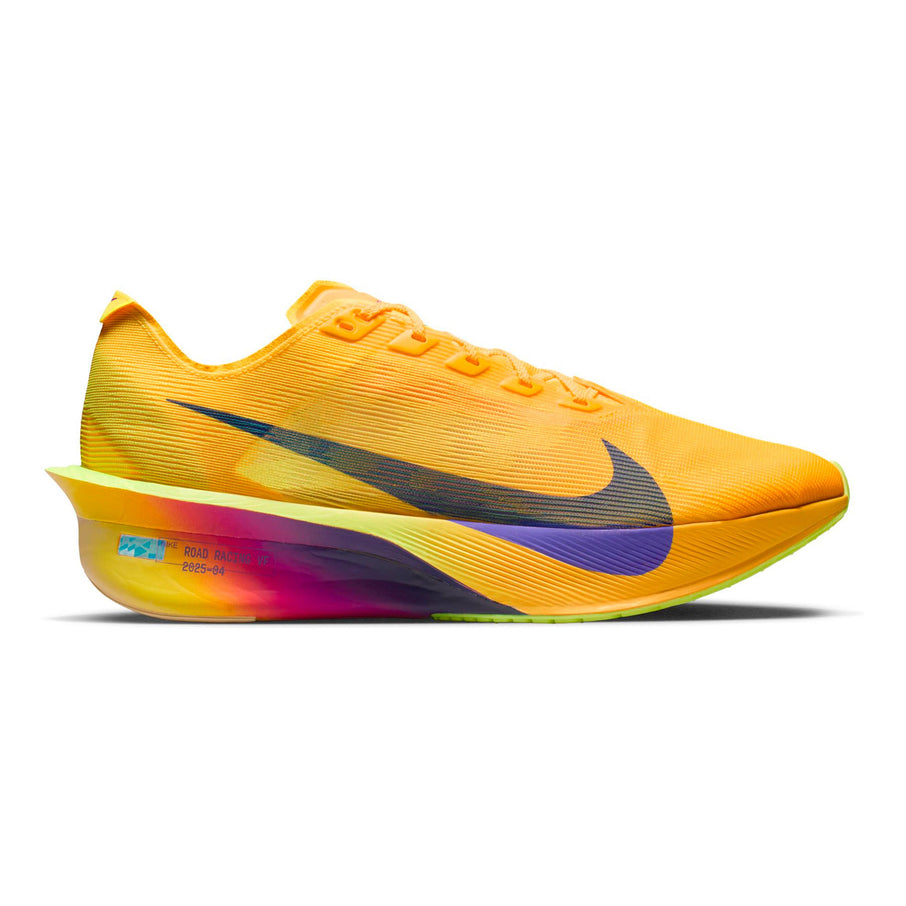
If you are looking for a lighter, nimbler racing shoe. Without the Air Zoom pods it is more agile through corners and more versatile across distances, from a 5 km race to the half marathon. You only run a marathon in the Vaporfly if you are light and land cleanly on the forefoot.
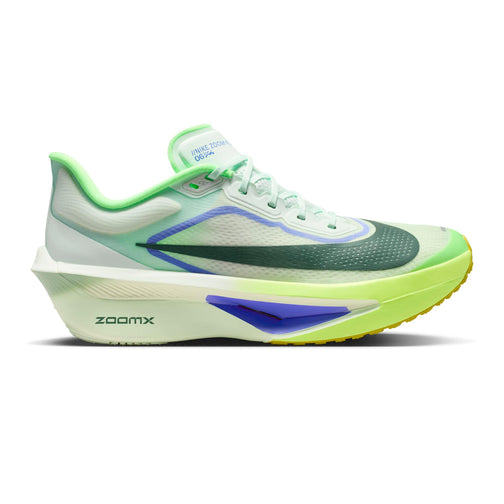
If you want the carbon ride in training without wearing out your racing shoe. The Zoom Fly is built more robustly and handles considerably more kilometres.
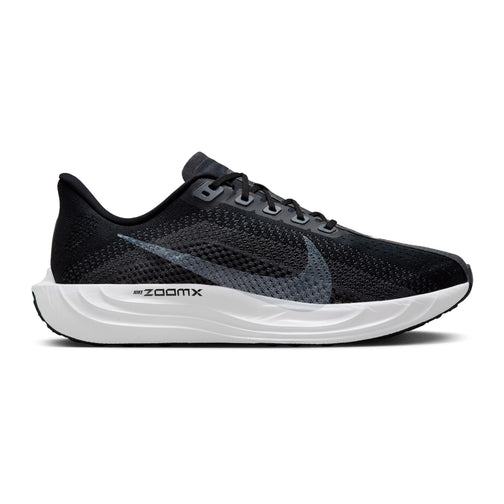
If you run fast training sessions and intervals but can do without the carbon plate. Light, responsive and with ZoomX foam, but more flexible and better suited to everyday use.

If you don't need a racing shoe but a solid all-rounder for your daily training. It carries you reliably from easy runs to speed sessions. And through a marathon too, if a personal best isn't the point.
Our tip: a carbon racing shoe like the Alphafly is not made for training towards a half marathon or marathon. If your main goal is to reach the finish and enjoy the distance, a Pegasus 42 or Vomero 18 will serve you perfectly. The Alphafly becomes interesting when you want to run the race itself to a specific time on the day.
Your questions about the Nike Alphafly.
No. This shoe is built for experienced runners with clean running form and stable muscles. There are no support elements and no wide base to catch mistakes in your stride. If you are just starting out, you will be safer and more comfortable in the Nike Pegasus 42.
No. What you need for that is excellent training. The Alphafly can give you an advantage on race day, but it does not replace your preparation. Plenty of people cross the marathon finish line in a Pegasus or Vomero and enjoy it just as much. The Alphafly becomes relevant when you have a specific target time in mind and want to squeeze out every second.
Realistically around 300 to 400 km before the propulsion of the Air Zoom units and the ZoomX foam noticeably fades. A training shoe like the Pegasus easily handles double that. The Alphafly is therefore a shoe you deliberately save for race days and the occasional fast session. After that you can keep using it in training, but the distinctive catapult feel fades over time.
For the Alphafly 3, Nike explicitly recommends going half a size up from your usual size. The shoe sits race-tight, especially in the forefoot and toe box, so that nothing slips at high speed. If you have wide feet or know that your feet swell over long distances, you should definitely follow that recommendation.
Possible, but not advisable. The soft ZoomX foam loses its propulsion with the kilometres, and the shoe is too valuable to wear down on easy runs. Save it for races and at most the occasional tempo run. For regular speed training with that carbon feel, the Nike Zoom Fly is the more durable alternative.
That depends on how you run. If you want to hold an evenly high pace over the full distance and straight stretches are your terrain, the Alphafly gives you more in the closing kilometres. If you are running a twisting city course or changing pace more often, the nimbler Vaporfly suits you better. You will find the details in our comparison above.
The Nike Alphafly series.
The Alphafly is the result of Nike's hunt for the two-hour mark. At the Breaking2 project in Monza in 2017, Eliud Kipchoge ran 2:00:25 – at that point still in a prototype of the Vaporfly. Two years later, in Vienna in October 2019, he became the first human to break two hours with 1:59:40. On his feet: a prototype of the Alphafly. Because the conditions did not match a regular race, the time still does not count as an official world record. From that prototype came the Alphafly series as you can buy it today.
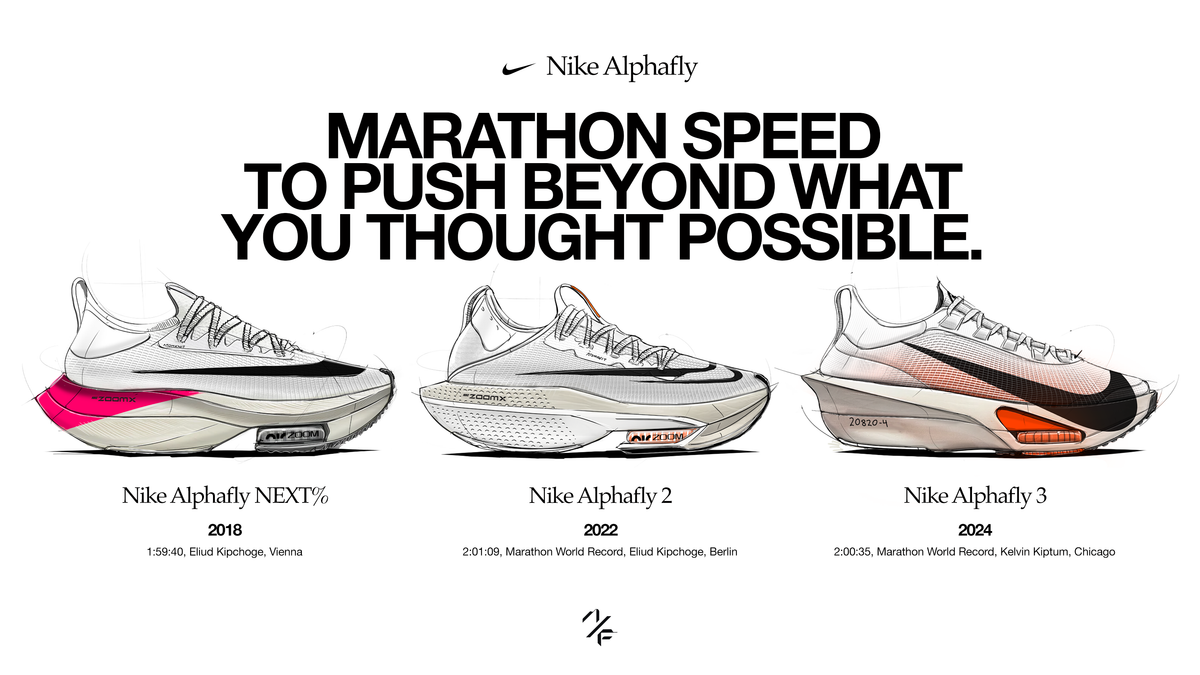
Since then the series has been through three generations. The Alphafly 1 was the first racing shoe to combine Air Zoom units with ZoomX foam and a full-length carbon plate, changing what is possible over long distances. The Alphafly 2 divided opinion – more stable, but also heavier and bulkier. With the Alphafly 3, Nike corrected course: lighter than ever, a continuous midsole, a smoother ride. It was in this version that Kelvin Kiptum set his marathon world record of 2:00:35 in Chicago in 2023. The competition has since caught up, and the pressure to keep developing in the carbon segment remains high.
The Nike Alphafly is a shoe for runners who know exactly what they need it for. If you want to do more than finish your marathon and are chasing a personal best, it is the right tool. Discover the available colours and sizes in our range now.